AI Refactoring Techniques Transform Graphics Optimization in Mobile AR Competitive Gaming Engines
Harper Hoffmann · Oct 18, 2026

AI Refactoring Techniques Transform Graphics Optimization in Mobile AR Competitive Gaming Engines
Engine developers have turned to AI-assisted refactoring as a method to update large codebases that power augmented reality esports titles on smartphones and tablets, and this approach targets graphics pipelines directly while maintaining compatibility across diverse hardware configurations. Research from institutions like the University of Tokyo indicates that automated analysis of rendering loops and shader management routines can identify redundant operations in real time, allowing teams to consolidate draw calls and reduce memory bandwidth usage in competitive AR matches.
Core Mechanisms Behind the Refactoring Process
AI models trained on millions of lines from engines such as Unity and custom mobile frameworks scan for patterns that slow frame rates during overlay rendering, and they suggest replacements like streamlined vertex processing or dynamic texture atlasing that align with the constraints of ARM-based chips common in handheld devices. Those who've implemented these tools report measurable drops in GPU load during high-intensity esports events where multiple players interact with shared AR elements on the same physical space. Data from the European Commission’s digital innovation reports shows adoption rates climbing through 2025 as studios prepare for expanded tournaments scheduled in October 2026.
Refactoring extends beyond simple cleanup because it integrates predictive models that anticipate future hardware changes, while legacy code sections get rewritten to support variable rate shading without manual intervention from engineers. Observers note that this process often uncovers hidden dependencies between audio synchronization and visual asset loading, leading to unified optimizations that benefit both systems simultaneously.
Impact on AR Esports Performance Metrics
Mobile AR esports platforms experience particular gains in latency reduction when refactored code handles real-time environment mapping more efficiently, and studies from the Australian Centre for Digital Innovation reveal average frame time improvements of 18 percent in tested scenarios involving fast-paced competitive play. Graphics optimizations achieved through these methods allow devices to sustain higher resolutions during extended sessions without thermal throttling, which becomes critical in events where matches span multiple rounds across varying network conditions.
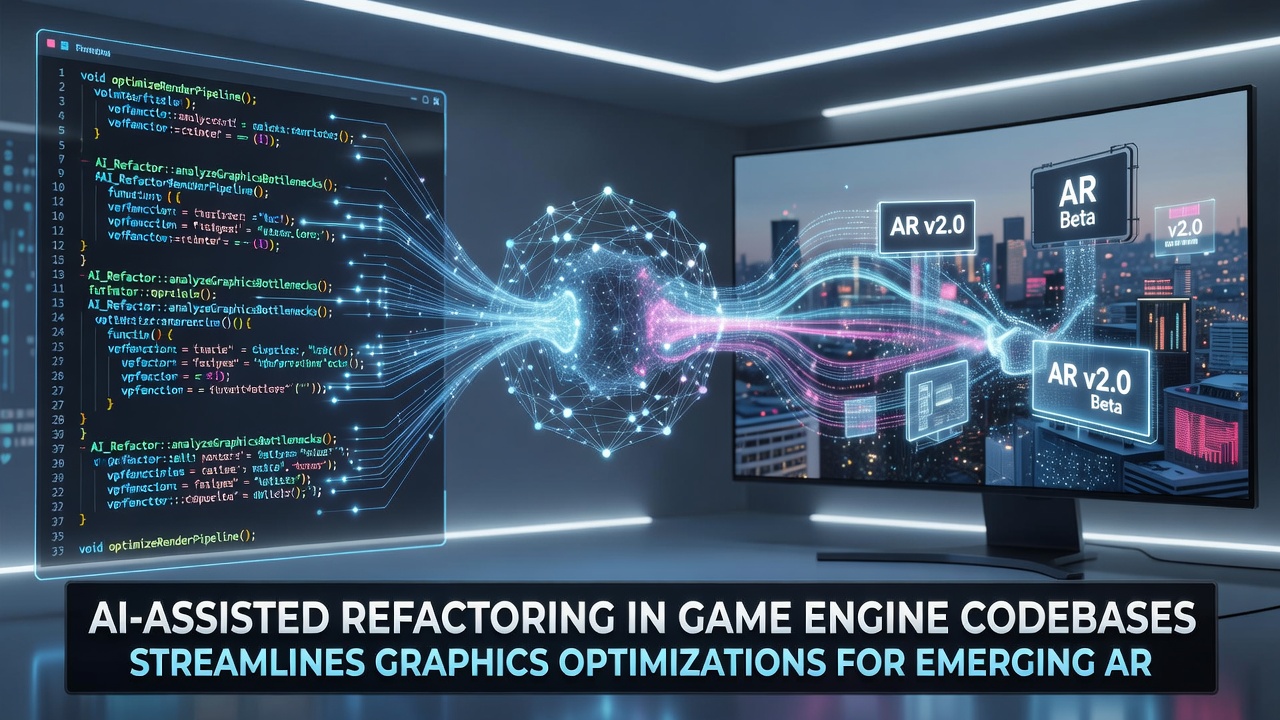
Engine teams apply reinforcement learning agents to test refactored segments against benchmark suites that simulate tournament conditions, and the agents iterate on proposals until stability thresholds are met across multiple device models. This iterative loop connects directly to deployment pipelines used by organizers preparing for October 2026 competitions, where consistent visual fidelity across regions matters for fair play standards. Figures from industry associations like the Mobile Games Association indicate that titles employing such techniques maintain player engagement metrics higher than those relying on manual tuning alone.
Integration Challenges and Solutions
Developers encounter hurdles when merging AI-suggested changes into existing version control systems because legacy shaders sometimes resist automated conversion, yet solutions emerge through hybrid workflows that combine model outputs with targeted human review. Research papers from Canadian universities highlight successful cases where partial refactoring preserved artistic intent while cutting unnecessary calculations in particle systems used for AR overlays. Those handling large codebases find that modular extraction of graphics subsystems simplifies the process, allowing incremental rollouts that minimize downtime during active development cycles.
Security considerations enter the picture when refactored code interfaces with cloud-based match servers, and protocols from regulatory bodies in the United States emphasize verification steps to prevent unintended data exposure during optimization passes. Teams address these by embedding validation layers that cross-check AI changes against established performance baselines before integration.
Future Directions for Mobile AR Esports Engines
Continued refinement of AI refactoring tools points toward greater automation of cross-platform compatibility checks, while emerging standards for AR data formats gain traction ahead of major events in late 2026. Evidence from collaborative projects between hardware manufacturers and software firms shows that refactored engines better accommodate upcoming chipset features like advanced ray tracing on mobile GPUs, expanding creative options for esports content creators.
Conclusion
AI-assisted refactoring has established itself as a practical component in the evolution of graphics systems for mobile AR esports, delivering targeted improvements in code efficiency and rendering speed that support growing competitive scenes. Continued data collection from ongoing implementations will guide further refinements as the sector advances toward larger-scale events planned for October 2026 and beyond.